Have you ever asked your child about a book they just finished, only to be met with a blank stare? They read the words, but the story didn’t quite stick.
This is a common challenge for parents and teachers. While many kids can sound out words and read fluently, true comprehension goes deeper. It’s about organizing thoughts, making connections, and remembering the key details that bring a story—or a lesson—to life.
Here’s the good news: one of the simplest, most effective tools for boosting comprehension doesn’t come from expensive apps or complicated programs. It comes from a pencil and a piece of paper.
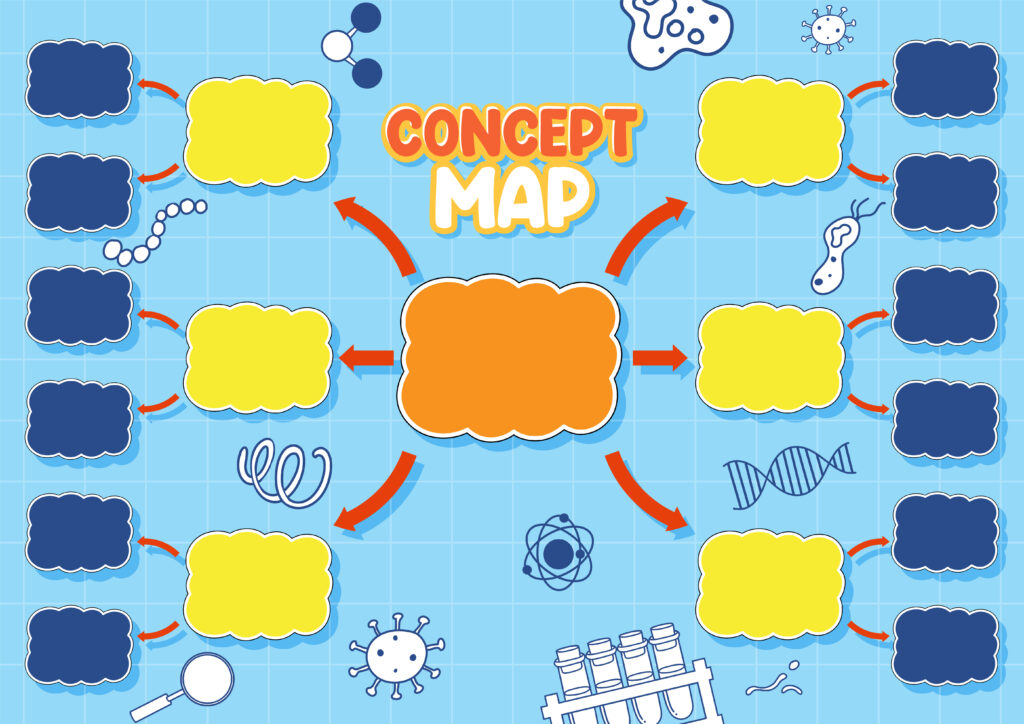
Graphic organizers are visual tools that help kids move from passive reading to active learning, turning stories and information into something they can truly understand and remember.
What Are Graphic Organizers, and Why Do They Work?
The brain is naturally wired to process information visually. Think about road maps, family trees, or even your calendar—each one takes complex information and lays it out in a way that’s clear, structured, and easy to follow.
Graphic organizers do the same for reading. Instead of letting details blur together, they give kids a visual framework to map out what they’re learning. This is especially powerful for visual and kinesthetic learners, who benefit from seeing and physically interacting with information rather than just hearing or reading it.
By organizing ideas into charts, diagrams, or maps, children begin to “see” the structure of the text, which boosts comprehension, recall, and critical thinking.
The “Story Map”: For Understanding Narratives
What it is: A simple diagram that lays out the essential building blocks of a story.
How to use it:
- Characters: Who are the main players in the story?
- Setting: Where and when does it take place?
- Plot: What is the main problem, and how does the story unfold?
- Resolution: How does it all end?
Why it works: Stories often have twists, subplots, and lots of detail. Kids can get lost in the middle and forget the big picture.
A story map helps them distill the narrative down to its core, clarifying cause-and-effect relationships and giving them a clearer sense of beginning, middle, and end.
The “Cause and Effect Chain”: For Tracking the Plot
What it is: A linear diagram that shows how one event leads to another.
How to use it:
- Draw a series of boxes connected by arrows.
- Fill in each box with a key event from the story.
- Use the arrows to show how one event causes the next.
Why it works: Many children can recall events but struggle to explain why they happened. This tool builds logical sequencing skills, teaching them to recognize patterns and predict outcomes.
It’s especially helpful for more complex books where multiple plot threads intertwine.
The “KWL Chart”: For Absorbing Non-Fiction
What it is: A three-column chart labeled K (Know), W (Want to know), and L (Learned).
How to use it:
- Before reading: Fill in the “K” column with what the child already knows about the topic and the “W” column with questions or what they hope to learn.
- After reading: Fill in the “L” column with new information they’ve gained.
Why it works: Non-fiction can feel overwhelming for kids, especially when it’s packed with facts and data. The KWL chart activates prior knowledge, sets a purpose for reading, and organizes new information.
By tying fresh knowledge to what they already know, kids are far more likely to retain it.
The “Venn Diagram”: For Comparing and Contrasting
What it is: A classic two- or three-circle diagram used to find similarities and differences.
How to use it:
- Assign each circle to a subject (e.g., two characters, two books, or two time periods).
- Write unique details in the outer sections of each circle.
- Write shared details in the overlapping section.
Why it works: This method sharpens critical thinking. Instead of just memorizing details, children must evaluate information, spot patterns, and identify meaningful connections.
It’s an excellent tool for both fiction (comparing characters) and nonfiction (comparing historical events or scientific processes).
Making Reading Fun with Graphic Organizers
What makes graphic organizers so effective is also what makes them fun—they turn reading into an interactive activity. Kids get to draw, connect, and map out what they’re learning, transforming reading from a solitary, passive act into a creative process.
Parents and teachers can encourage kids to:
- Decorate their organizers with drawings of characters, symbols, or colors.
- Work together on organizers as a shared activity.
- Keep a “reading binder” where they store their completed organizers to track progress over time.
When reading feels hands-on, it also feels more meaningful.
Speak to a Reading Expert
At its core, reading comprehension is about understanding—not just sounding out words. And understanding grows when kids can visualize, organize, and connect what they read.
Graphic organizers are a simple yet powerful way to make these activities happen. Whether it’s a story map, a cause-and-effect chain, a KWL chart, or a Venn diagram, these tools give children the clarity they need to become confident, thoughtful readers.
Final thought: When kids use graphic organizers, reading stops being a chore and starts feeling like a puzzle to solve or a game to play. And that shift can be the spark that turns them into lifelong readers.
At Read Smart, we believe every child deserves the tools to succeed—not just in reading words, but in truly understanding them. Our programs combine proven strategies with personalized support to build confidence and comprehension step by step.
Want to see how graphic organizers and other research-backed techniques can help your child thrive? Schedule a FREE reading evaluation with Read Smart today and give your child the clarity and confidence they need to fall in love with reading.
